
Printing Guides
Screen Printing vs DTF vs DTG: Choosing the Right Method for Your Order

Screen printing vs DTF comes down to quantity and color count. Screen printing is the most economical and durable choice for larger runs of one design with a handful of colors, because its one-time setup gets spread across every piece. DTF and DTG have no setup at all, so they win on small orders, full-color artwork and personalization, with DTF covering almost any fabric and DTG giving the softest print on cotton.
BizzyStitchn prints with DTF and screen prints orders of 100+ pieces (we don't offer DTG), and this guide isn't a sales pitch for one machine; it's how we'd decide for your order. It covers cost by quantity, color limits, feel, durability and fabric, then finishes with a decision chart. If you're choosing between the two digital methods only, our detailed DTG vs DTF guide goes deeper. For everything we print, visit our apparel printing hub.
The Short Answer: Let Quantity and Colors Decide
Quick answer: Screen printing for larger runs of one design in a few colors; DTF or DTG for small orders, full color and names, with DTF on almost any fabric and DTG softest on cotton.
| Method |
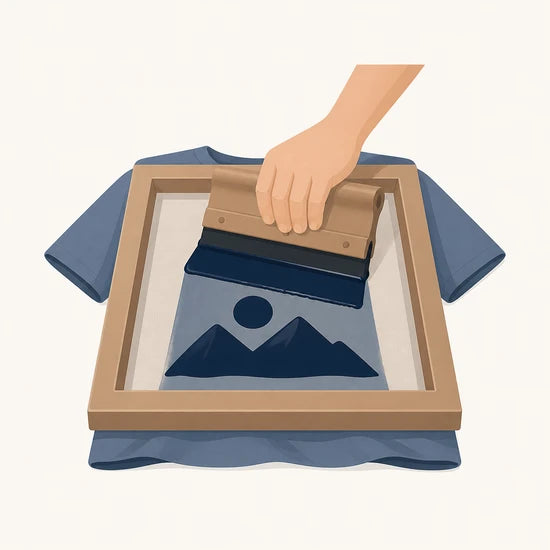 Screen printingPlastisol or water-basedInk is pushed through a mesh screen, one color at a time |
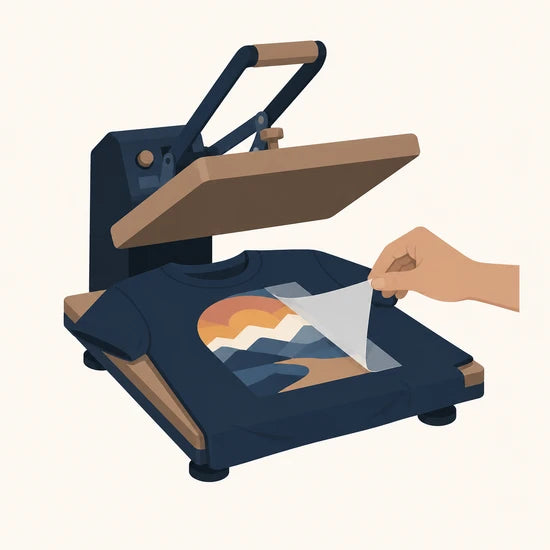 DTFDirect to filmYour design is printed on film, then heat-pressed on |
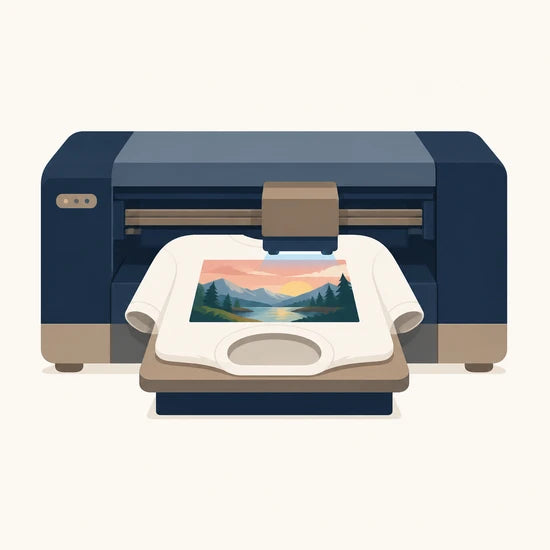 DTGDirect to garmentA printer sprays ink straight into the cotton |
|---|---|---|---|
| Sweet spot | Larger runs of one design | 1 to a few hundred pieces, mixed fabrics | 1 to small runs on cotton |
| Full color and photos | LimitedA few spot colors; practical up to about 6 | StrongUnlimited colors, gradients included | StrongUnlimited colors, photos included |
| Names on each piece | LimitedImpractical piece by piece | EasyNames can change piece by piece | EasyNames can change piece by piece |
| Fabrics | Cotton, blends and fleece | Nearly all, including polyester | Cotton and high-cotton blends |
| Feel | Thin ink layer (plastisol) or soft (water-based) | Smooth film on the surface | Softest: the ink is in the fibers |
| Durability | ExcellentOften outlasts the shirt when properly cured | Very goodWhen pressed correctly | GoodLasts well with gentle care |
to bizzystitchn.comUpdated October 2026. Source:bizzystitchn.com/blogs/printing/screen-printing-vs-dtf-vs-dtg
Two questions settle most orders. How many pieces share the exact same design? And how many distinct colors does that design have? Lots of pieces with few colors points to screens. Few pieces, many colors or individual names points to digital.
DTF Transfers Next to Traditional Screen Prints
These two are the most common head-to-head for branded team and business orders, because both work on dark garments and both are tough.
How they're made. A screen print is made by pushing ink through a mesh stencil, one screen per color, directly onto the shirt, then curing it. A DTF print is made off the shirt: the full design is printed on film with a white base, coated with adhesive powder, cured, then heat-pressed on.
Look. Screen-printed plastisol gives the most saturated, opaque spot colors and exact Pantone matching. DTF gives sharp full-color detail, including gradients and photos that screens would need many extra screens to imitate.
Feel. Both sit on the surface. A screen print's ink layer flexes with the fabric and, with water-based or discharge inks, can be almost unnoticeable. A DTF print is a smooth film that feels firmer over large solid areas.
Durability. A properly cured screen print is the benchmark and often outlasts the shirt. DTF comes close when it's pressed correctly and washed with care.
Cost. Screens carry setup; DTF doesn't. That makes DTF printing with no minimums the clear choice for a dozen pieces, and screens increasingly attractive as quantity rises.
Screen Printing vs DTG: Detail, Minimums and Hand Feel
DTG and screen printing are both at their best on cotton, but they solve opposite problems.
Detail. DTG prints directly from a digital file in fine droplets, so photos, watercolor art and subtle gradients come out naturally. Screens reproduce detail with halftone dots, which works well for illustrations but is less suited to photographic images.
Minimums. The economics differ, and at BizzyStitchn screen printing starts at 100 pieces (for smaller runs we print with DTF, since we don't offer DTG). DTG has no setup, so one shirt costs the same to start as fifty. A screen print's setup only makes sense across a batch.
Hand feel. On a light cotton tee, DTG is almost impossible to feel. Water-based screen prints come close; standard plastisol is a little more noticeable. On dark garments, DTG needs a white underbase that adds a light layer, while a screen print's white underbase is part of its punchy look.
Durability. Screen prints hold their color longer through hard washing. DTG prints last well with gentle care but can gradually soften on dark shirts.
For photo gifts, art prints and one-offs on cotton, DTG is the softest choice, as our direct-to-garment printing guide explains; we print those with DTF. For a 100-piece run of a two-color logo, screens win.
The Break-Even Point Where Screens Get Cheaper
Screen pricing has two parts: the one-time setup (at BizzyStitchn, one setup per color in the design, quoted with your 100+ piece order) and the cost of each print, which drops as quantity rises because a ready screen prints in seconds. DTF and DTG have no setup, and their cost per print stays fairly flat across quantities. Our screen setup is charged once per design, so reorders, and the same design on hoodies or youth sizes, never pay it again.
Here's how screen setup spreads across an order. Each color needs one screen, and each cell shows how much of one screen's setup cost every shirt carries:
| Design | Screens to set up (one time) | Share of one screen per shirt: 12 pcs | 24 pcs | 48 pcs | 144 pcs |
|---|---|---|---|---|---|
| 1 color | 1 screen | 1/12 | 1/24 | 1/48 | 1/144 |
| 2 colors | 2 screens | 1/6 | 1/12 | 1/24 | 1/72 |
| 4 colors | 4 screens | 1/3 | 1/6 | 1/12 | 1/36 |
Two patterns stand out. First, a one-color design reaches a small setup share per shirt very quickly, so screens can make sense for surprisingly modest quantities (we screen print from 100 pieces). Second, a four-color design needs a much larger batch before its setup becomes a minor part of the price, which is why full-color art on small orders usually belongs on DTF or DTG.
The exact crossover also depends on garment, print size and number of locations, so when an order sits near the line, we compare both methods for you. Larger orders of simple designs are where bulk t-shirt printing gets the lowest price per shirt.
Gradients, Photos and Color Count
Count colors the way a screen printer does: each distinct ink is one screen. A black-and-gold logo on a white shirt is two colors. On a black shirt, your mockup and quote show exactly how the same logo prints, and a white base layer never adds to screen-print setup.
Screens handle gradients with halftones, tiny dots of one ink that create the illusion of shading, and can reproduce photos with simulated process printing. Both work, but they add screens and complexity, and results vary with garment color.
DTF and DTG don't care about color count. A photo, a sunset gradient or a 14-color illustration costs the same to set up as a single word, which is zero. If your artwork is photographic or has more than about five or six colors and your quantity is modest, go digital. If it's a bold logo in two or three colors, screens give the crispest, most consistent result across a big run.
Hoodies, Hats and Polyester: Which Method Works Where
Hoodies: all three methods work on cotton-rich fleece. Screens are the best value for big matching orders of team or staff hoodies. DTF suits 50/50 and polyester fleece and mixed-size small batches. DTG gives a soft print on cotton-rich hoodies for one-offs. Compare hoodie printing options by style and fabric.
Hats: DTF is the practical print choice, pressed onto curved fronts with a hat platen. Screens and DTG both need a flat surface. For staff caps and polos, thread often beats ink, and our page on embroidery vs printing explains when.
Polyester and performance wear: DTF bonds reliably. Screen prints on polyester need special low-cure, bleed-resistant inks to stop the garment's dye from tinting the print, and we use low-bleed ink on polyester at no extra charge. DTG isn't recommended on polyester. For white or light polyester jerseys, sublimation is another option, though it's not one we offer.
Tri-blends and soft tees: water-based screen inks and DTG both give a soft, vintage look; DTF works but feels more like a layer.
A Decision Chart for Branded Team, Business and Event Orders
| Your order | Best method | Why |
|---|---|---|
| Team, school or church shirts, one design, few colors, larger quantity | Screen printing | Setup spreads thin, toughest print |
| Team order with individual names and numbers | Screen print plus DTF names | Shared design on screens, names per piece |
| Staff shirts with a full-color logo, mixed sizes and fabrics | DTF | No setup, same look on cotton and poly |
| Company polos and caps | DTF or embroidery | Curved and synthetic surfaces |
| Event or 5K shirts, one design | Screen printing | Lowest price per shirt at volume |
| Small brand testing new designs | DTG or DTF | No setup, reorder winners |
| Personalized gifts, photos, one-offs on cotton | DTG | Softest, most photographic (we don't offer DTG; we print these with DTF) |
| Dark hoodies with detailed art, small batch | DTF | Bright whites, durable |
Getting Artwork Ready for Each Method
The same logo file can need different prep depending on the method, so it helps to know what each one wants.
- Screen printing: vector SVG or PDF artwork with fonts outlined separates cleanly into one layer per color (AI and EPS files can be sent with a bulk quote). Simplify where you can: merging two similar shades into one saves a screen without changing how the design reads from a few feet away.
- DTF and DTG: a PNG with a transparent background at 300 DPI at the actual print size, or a vector file. A 12-inch-wide front print needs about 3,600 pixels across.
- All three on dark garments: avoid soft glows, drop shadows and faded edges. Every method lays white under the colors on dark shirts, and semi-transparent pixels can print as a rough halo. Make edges either solid or fully transparent.
- Big solid areas: on DTF they feel stiff and warm, which matters at an outdoor Orlando event in summer. Knockouts and textures keep any print lighter.
If you're not sure your file is ready, send it anyway with your quantity and garment; we'll flag anything that needs fixing before anything prints.
Durability and Care Across All Three
All three methods last a long time when they're produced correctly, and they fail for different reasons. Screen prints fail mainly when ink is under-cured, which shows up as cracking or fading early on. DTF fails mainly when a transfer is under-pressed, which shows up as lifting edges. DTG wears gradually, as cotton fibers loosen through the print and soften the color on dark garments.
The care routine is the same for every one of them: wait a day before the first wash, turn the garment inside out, use cold or warm water, skip bleach and fabric softener, tumble dry low or hang dry, and never iron directly on the print. Staff and team shirts that go through heavy weekly washing are where screen prints and DTF earn their reputation.
Mixing Methods to Add Personalized Names to Bulk Orders
You don't have to pick one method for an entire order. The most common combination is a screen-printed team logo on the front with each player's name and number added on the back as an individual DTF print. Screens keep the shared design economical, and the heat-applied names keep every piece personalized without making a new screen for each name. Learn how heat transfers work and how they hold up in the wash.
Other smart combinations: a screen-printed front with a small DTF sleeve logo for sponsors, or a full-color DTF front print on a premium cotton tee with a DTF sleeve hit. For 100+ piece orders, send us your roster or design list, and we'll lay it out on a single free mockup.
Ready to Order?
For most branded team, business and event runs of a simple design, screens remain the best value, and the screen printing vs DTF choice usually comes down to color count and quantity. Send your artwork, quantity and garment, and request a bulk quote (100+ pieces) for a free mockup. If screens are the right fit, our bulk screen printing service covers inks, garments and artwork prep; if not, we'll recommend DTF and show you why.
Frequently Asked Questions
Is DTF better than screen printing?
Neither is better in every case. DTF is better for small orders, full-color designs, gradients and mixed fabrics like polyester and hats, because it has no setup fee. Screen printing is better for larger runs of a design with a few colors, giving the lowest cost per piece and the most durable, vivid spot colors. Quantity and color count usually decide it.
Is screen printing cheaper than DTG?
For larger runs of a simple design, yes. Screen printing has a setup for each color, charged once per design (with us, quoted with your 100+ piece order), and each additional print costs less as quantity grows. DTG has no setup, so it's usually cheaper for one-offs and small batches, especially for full-color artwork. On light cotton tees with detailed art and modest quantities, DTG often comes out ahead.
How many shirts do you need before screen printing is worth it?
It depends mostly on the number of colors. With a one-color design, the setup is spread thin across a fairly small batch, so screens can make sense early. With four or more colors, you need a much larger quantity before setup becomes a small part of the price. Our screen printing starts at 100 pieces, and we'll compare methods for you when your order is close to the line.
Which lasts longer, screen printing or DTF?
A properly cured screen print is generally the most durable and can outlast the garment, especially with plastisol ink. DTF is very durable too when it's pressed correctly, holding its color through many washes. For both, washing inside out in cold or warm water, skipping bleach and tumble drying low or hang drying protects the print.
Is all custom apparel screen printed?
No. Screen printing is common for bulk orders, but apparel is also decorated with DTF, DTG, sublimation and embroidery. Each suits different quantities, fabrics and designs: DTF for full color on mixed fabrics, DTG for soft prints on cotton, sublimation for light polyester and embroidery for polos, caps and jackets. The right method depends on your order, not a default.

Your brand. Beautifully made.
See your design live in 3D
Upload a logo or add text and see it on the garment instantly. No minimums. Ordering 100+ pieces? Get a bulk quote.